
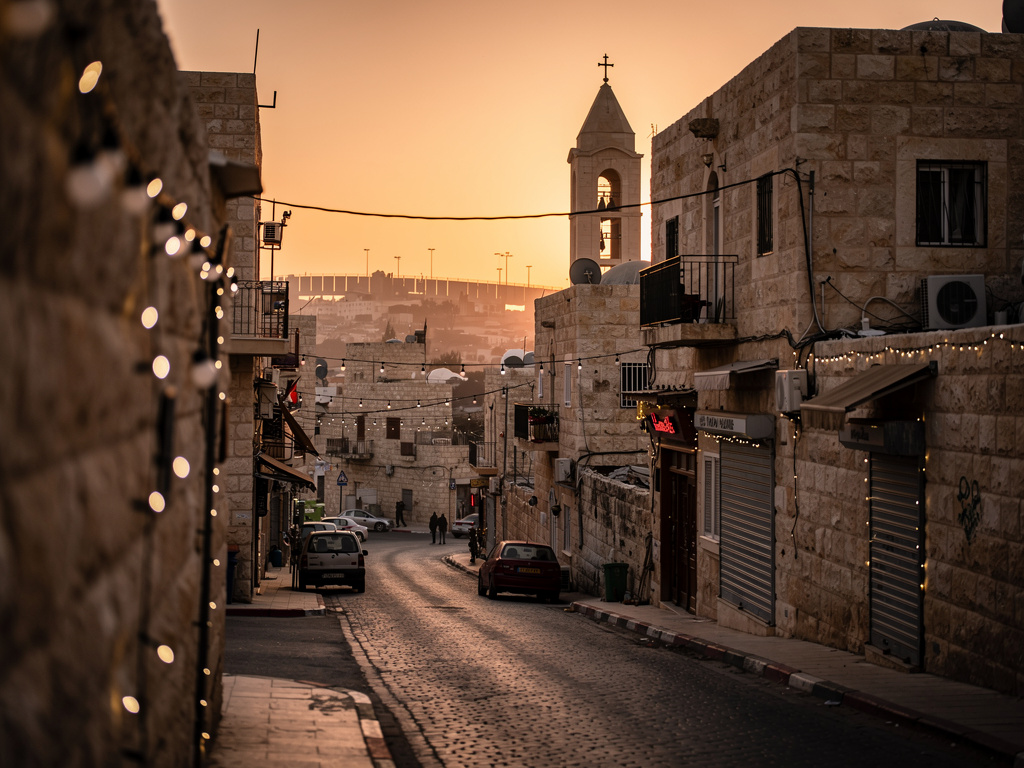
Bethlehem Christmas Reframed: A Palestine Story of Occupation
Palestine’s Bethlehem is described as surrounded by walls and checkpoints, with residents living under an apartheid-like system, according to Rev Dr Munther Isaac in an Al Jazeera English op-ed published December 24, 2025. He argues that Christmas originates in the Middle East, not the West, reframing the holiday as a Palestinian story that challenges Western Christian narratives and asks readers to remember the real birthplace and its people amid the ongoing Gaza and West Bank conflict. The piece links biblical flight and massacre motifs to contemporary displacement and siege, urging Western Christians to stand in solidarity with Palestinian Christians during the Gaza crisis and to observe Christmas with attention to Bethlehem’s hardship.
Background & Context
- The article anchors Christianity's origins in the Middle East, arguing that Bethlehem sits at the heart of this historical faith and that its story unfolds under Israel's control of the West Bank. It describes walls, checkpoints, and a fragmented daily life shaped by occupation.
- It frames the Christmas narrative against the Gaza conflict, linking displacement and risk to the broader Gaza Strip and portraying movement restrictions as a form of apartheid that shapes worship, travel, and family life in the region.
- By reframing Christmas as a moment of solidarity with the oppressed and a critique of empire and violence, the piece urges global Christian communities to shift attention toward Bethlehem and its people.
- Key actors highlighted include Palestinian Christians of Bethlehem, Israeli authorities as the occupying power, Gaza civilians, and the Global Christian community, whose responses can influence humanitarian relief, advocacy, and the discourse around faith and policy.
- The analysis emphasizes that historical memory, theology, and geopolitics intersect in everyday life, with closures, fragmentation, and military presence altering the context in which Christian rituals and sacred sites are observed.
- It situates the ongoing conflict within broader regional dynamics among Israel, Palestine, and neighboring states, noting that hopes for peace depend on addressing governance, human rights, and freedom of movement in a divided landscape.
Key Developments & Timeline
Time: ancient origins — In historical context, Christian origins and Christmas are rooted in Palestine and the broader West Asia/Middle East region rather than in Europe or the West, challenging common narratives that center Western geographies. This reframing highlights how the holiday’s roots extend deep into regional religious and cultural history, shaping a shared story that precedes modern borders and national identities. The emphasis on place underscores how Bethlehem’s significance is tied to a long, intertwined history of faith, community, and regional exchange.
Time: contemporary Bethlehem under occupation — Today, Bethlehem is described as surrounded by walls and checkpoints, with residents living under a system described as apartheid and fragmentation in the West Bank. The daily realities of restricted movement, economic constraint, and social division illuminate how space and governance influence worship practices, family life, and community resilience. This context reframes Christmas not only as celebration, but as lived experience within a protracted political struggle in Palestine.
Time: Christmas reframed as Palestinian story — Christmas is characterized as a Palestinian story par excellence, emphasizing solidarity with the oppressed and God’s presence among the vulnerable. This framing invites readers to read the holiday through a moral lens that centers justice, care for the marginalized, and the spiritual significance of solidarity in a context of occupation. The Palestinian narrative of Christmas thus becomes a lens for empathy and collective action.
Time: biblical flight and massacre linked to displacement — The narrative of the biblical flight to Egypt and the massacre is linked to contemporary experiences of displacement, siege, and occupation in the region. By drawing this parallel, the article connects ancient texts to ongoing suffering, highlighting how sacred stories resonate with the fears and hopes of families facing displacement in Palestine and beyond. The analogy serves to deepen public memory and moral reflection on conflict.
Time: public observances resume after hiatus — Public Christmas observances in Bethlehem recently resumed after a two-year hiatus, framed as a painful but necessary act in the face of ongoing conflict and genocide in Gaza. The return to public worship signals resilience, yet also foregrounds the difficult choices communities make to commemorate amid siege, blockade, and humanitarian crisis, inviting international observers to witness the conditions firsthand.
Time: call to focus on real conditions — The author urges Western Christians to focus on Bethlehem’s real conditions rather than a mythologized version of the city. This appeal emphasizes accountability, humanitarian concern, and solidarity with the Palestinian people, urging more informed engagement with the region’s ongoing crisis and its people, and challenging sanitized narratives about faith, place, and politics in Palestine.
Official Statements & Analysis
“Christmas is a story of empire, injustice and the vulnerability of ordinary people caught in its path,” the op-ed states, noting that “Bethlehem today is surrounded by walls and checkpoints built by an occupier. Its residents live under a system of apartheid and fragmentation.” “Christmas is a Palestinian story par excellence,” it adds, emphasizing that to remember Bethlehem is to remember that God stands with the oppressed — and that the followers of Jesus are called to do the same, with implications for military strategy and civilian protection.
“Celebrating this season does not mean the war, the genocide, or the structures of apartheid have ended,” the piece continues, and it says that “A genocide was unfolding in Gaza, and as people who still live in the homeland of Christmas, we could not pretend otherwise.” It also notes that Bethlehem celebrated Christmas for the first time after two years without public festivities, describing this decision as painful yet necessary and a sign of resilience under siege, a framing that underscores the need for humanitarian awareness and safe access to aid in conflict zones.
Conclusion
Seen from Bethlehem's Palestinian Christian community, Christmas is not a Western cultural fantasy but a living story of occupation in Palestine, where walls, checkpoints, and daily acts of courage shape the season, reminding visitors that faith persists despite restricted movement and unequal laws.
The main takeaway is a call to remember the real birthplace and its people amid ongoing conflict in Gaza and the broader region, inviting global Christians to engage with reality rather than mythologized visions, and to consider humanitarian needs alongside traditional celebrations.
The piece emphasizes humanitarian considerations and the need for reliable information on safe access and aid delivery, illustrating how regional dynamics in the West Bank and Gaza influence shelter, supplies, and civilian safety in high-tension environments that touch everyday life.
Looking to the future, the outlook urges ongoing attention to Bethlehem and the Palestinian situation from faith communities and humanitarian actors, promotes accountability and awareness, and notes that no formal peace process scenarios are laid out in the discussion, leaving room for continued advocacy.
Tactical Loadouts – Build your full bug-out kit with modular, mission-ready tactical gear.
Bug-Out Bag Essentials – A compact go-bag setup perfect for urban or rural disasters.
Related: Syria Reflects on One Year Post-Assad Ouster
Related: Netanyahu Reaffirms Commitment to Disarm Hamas Amid Ceasefire