
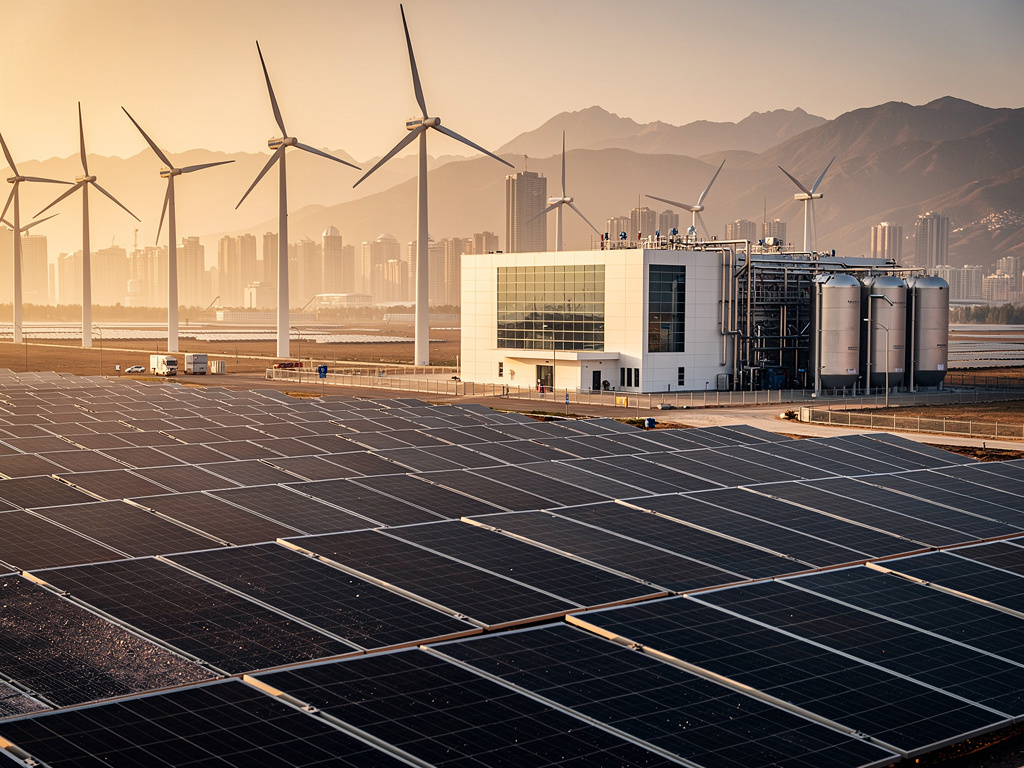
China Leads Global Clean Fuels Race Through Green Tech
China is leveraging its dominance in solar, wind, battery manufacturing, and related green tech to take an early lead in the global clean fuels race, the Financial Times reports, with long-term implications for energy transition strategies worldwide. State-backed industrial policy and the scale of domestic production are accelerating development across hydrogen, biofuels, and synthetic fuels, potentially reshaping who dominates these markets and how energy transitions unfold, and global markets. Observers in the United States and European Union are monitoring early shifts in leadership, considering implications for global supply chains, energy security, and geopolitics as countries recalibrate alliances and industrial policy.
Background & Context
- In the global transition to clean energy, China is a major producer and investor in solar, wind, energy storage, and low-emission fuels, with extensive state involvement directing policy and subsidies to domestic firms. This positioning could confer early leadership in the developing clean fuels market and influence global competition and investment flows, as reflected in china us news coverage of industrial policy and market access.
- With a network of government agencies and policy makers coordinating with both state-owned and private green-tech firms, China seeks to shape standards, supply chains, and investment climates that could tilt the balance in global deals on solar panels, batteries, and clean fuels, affecting US-China trade dynamics.
- Observers note that the evolving dynamic among major powers—United States, European Union, Japan, and South Korea—will hinge on how China's capabilities in rapid scale-up and technology deployment interact with tariff regimes, R&D spending, and strategic partnerships in the energy transition.
- Geopolitical considerations, including competition over energy security, technology leadership, and climate commitments, intersect with economic tools such as tariffs and investment screening, making the clean energy sector a focal point of policy debates that span trade, security, and foreign policy across continents.
- Ultimately, the public posture and market responses of the major actors—People's Republic of China, United States, European Union, Japan, and South Korea—will shape the speed and direction of global clean energy adoption, with consequences for policy dynamics, capital flows, and risk assessment in energy markets.
Key Developments & Timeline
-
Timeframe: Ongoing — China leads in solar, wind, and battery manufacturing, underpinning its rising role in clean fuels. State-backed policies and the scale of domestic production are accelerating R&D, deployment, and cost reductions across wind, solar, and energy storage, creating a strong platform for integrating hydrogen, biofuels, and synthetic fuels into national energy strategies. This momentum positions China to influence global competition in clean fuels categories, shaping supplier bases, investment flows, and policy benchmarks worldwide.
-
Timeframe: Ongoing — The momentum is reinforced by continued policy support and large-scale domestic production, which reduces dependence on imports and enhances resilience. With more gigawatts of capacity coming online and broader investment in electrolyzers, refinery upgrades, and carbon management, the sector moves toward lower abatement costs and faster commercialization of clean fuels. This dynamic could affect market structure, project lead times, and international trade relations.
-
Timeframe: Ongoing — Global supply chains and energy security could be affected by shifts in leadership of the clean fuels market. As China expands its footprint in hydrogen pathways, synthetic fuels, and biofuels, buyers in the Asia-Pacific and European markets may diversify suppliers, recalibrate risk, and adjust strategic stockpiles to account for new competitive benchmarks.
-
Timeframe: Ongoing — Observers in the US and EU are monitoring shifts in technology leadership and strategic energy partnerships. The evolving landscape is widely discussed in china us news and policy debates, influencing collaboration on R&D, joint ventures, and standards development, as well as tariff and investment decisions tied to clean fuel technologies. This trend highlights the broader US–China energy dynamics and the need for diversified, secure supply chains.
-
Timeframe: Ongoing — Analysts also consider long-tail scenario questions in policy circles, for example: what happens if we go to war with china? Such inquiries appear in strategic discussions about energy security, defense planning, and long-term investments in clean fuels infrastructure. While not predictions, they underscore the high stakes of technology leadership in the evolving china energy landscape and the importance of resilient, diversified partnerships at regional and global levels.
Official Statements & Analysis
Officials emphasize energy security considerations, noting that potential shifts in global clean energy supply chains could affect not only the reliability of fuel sources but also access to essential components such as solar cells, batteries, catalysts, electrolyzers, and related equipment across multiple markets, including China. To mitigate risk, they urge diversifying supply lines, reducing reliance on any single country for key inputs, establishing robust monitoring of critical minerals—lithium, nickel, cobalt, rare earths, and other inputs essential to green technologies—and building redundancy in manufacturing, logistics, and regional distribution networks to cushion against policy shifts.
In addition, policymakers call for strategic readiness through on-site generation, microgrids, and prudent stockpiles of usable fuels where feasible, coupled with ongoing policy awareness to track export controls and shifts in cross-border technology transfers that could reshape competitiveness, market access, and the pace of decarbonization across sectors. Context from the Financial Times frames China as leveraging its leadership in solar, wind, battery manufacturing, and related green tech to gain an early edge in the global clean fuels race, a development that could ripple through energy security, influence investment flows, and create new dynamics in global supply chains that reverberate beyond the energy sector. Observers in the US and EU are monitoring these shifts for implications on technology leadership, partnerships, and long-term energy policy, with secondary keywords like china us news surfacing in analyses and discussions of how geopolitical factors intersect with green-tech strategy and international trade tensions.
Conclusion
China is leveraging its dominance in green technologies to take an early lead in the global clean fuels race, signaling a shift in energy economics and geopolitical dynamics that readers should monitor in china markets, policy trends, and the evolving balance of technology leadership. For survivalists and policymakers alike, the implications are clear: reinforce energy security by diversifying supply lines, expanding stockpiles where feasible, monitoring critical minerals such as lithium, nickel, cobalt, and rare earths, and considering on-site generation or microgrids to bolster resilience against disruptions. Global readers should stay aware of export controls and policy shifts that could affect cross-border technology transfers and fuel products, as these dynamics will shape future operations, risk assessment, and preparedness planning for individuals, communities, and regional networks. Looking ahead, a more diversified, multi-sourcing approach to green tech components and continued attention to geopolitical developments will likely influence china us news and broader energy transition strategies, guiding decisions on investment, risk management, and long-term readiness in a rapidly changing global energy landscape.
Bug-Out Roll Organizers – Quick-access, roll-up organizers make gear retrieval fast and simple.
Coffee (Instant, Shelf-Stable) – Trade, sip, or stock — prepper-favorite coffee that stores long and brews fast.
Related: Israel Intercepts Humanitarian Flotilla, Detains Activists