
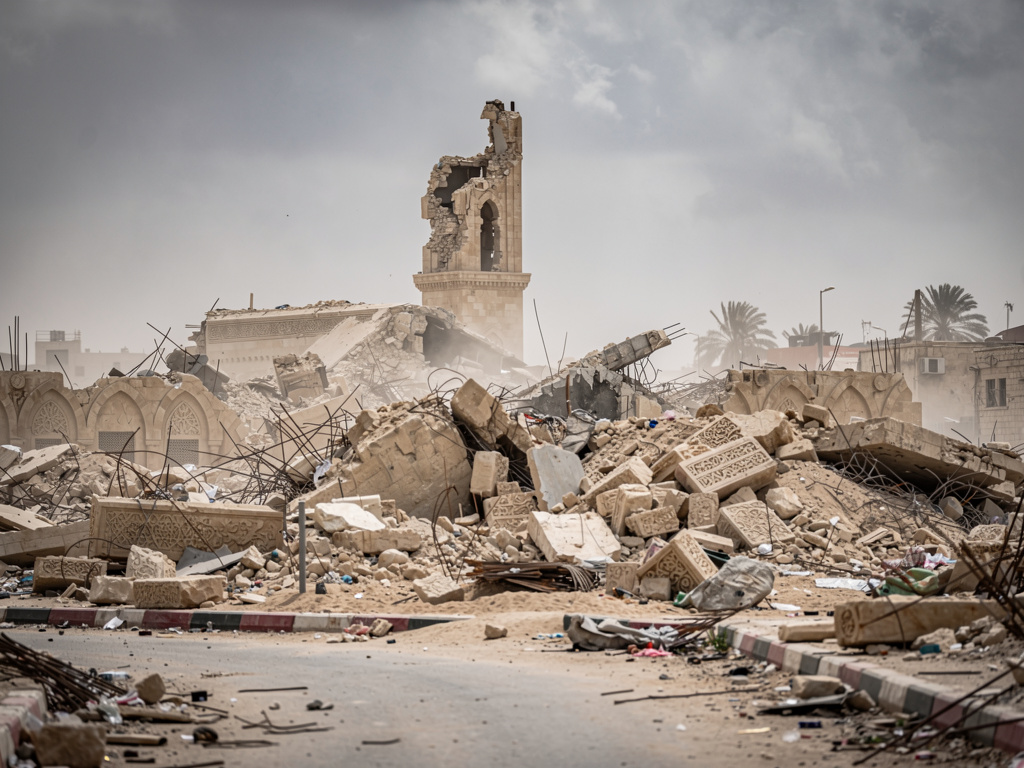
Historic Great Omari Mosque Destroyed in Gaza City Strike
Gaza City’s Great Omari Mosque, a landmark with origins dating back more than two millennia, stands as a symbol of Gaza’s cultural heritage and community identity, drawing worshippers and visitors even as the city endures repeated rounds of conflict. December 2023 Israeli strike destroyed the site, underscoring the cultural losses accompanying ongoing conflict in Gaza, and leaving a void felt by families, scholars, and devotional networks that sustained it for generations. Hatem Haniya, the mosque’s administrator, reflects on its long history and its importance to Gaza’s people, offering a somber lens on heritage amid ongoing violence that reshapes daily life.
Background & Context
- The Omari Mosque is a prominent religious and historical site in Gaza City, with origins more than 2,000 years old. Its destruction in December 2023 by an Israeli strike represents a significant loss of cultural heritage amid the Gaza conflict, illustrating how warfare directly threatens sacred spaces and the collective memory of residents in the Gaza Strip.
- Hatem Haniya, the mosque administrator, speaks of the mosque’s enduring legacy for the people of Gaza City. He notes that the site once served as a place of worship, study, and community gathering for generations, and his reflections emphasize how the loss reverberates through daily life, identity, and the city’s historical narrative amid ongoing violence.
- The incident sits within a broader pattern of damage to cultural landmarks in the region, where conflict intersects with humanitarian concerns and reconstruction challenges. As security tensions persist, residents face displacement and uncertainty while authorities navigate the difficult task of protecting heritage sites and coordinating relief for affected communities.
- Experts and residents alike stress the importance of documenting memory, supporting survivors, and sustaining dialogue about Gaza’s cultural treasures. The destruction of Omari Mosque underscores the need for careful preservation and long-term protection of heritage within a volatile security environment, even as the people of Gaza continue to endure ongoing hardship.
Key Developments & Timeline
-
December 2023: Israeli strike destroys the Great Omari Mosque in Gaza City. The Great Omari Mosque is a landmark in Gaza City with a history spanning more than two millennia, making its loss a significant cultural heritage event for the Gaza Strip. The destruction highlights cultural heritage losses amid ongoing conflict in Gaza, extending beyond immediate casualties to long-term impacts on community memory and religious life in Gaza City. According to the provided context, Hatem Haniya, the mosque’s administrator, discusses its history and importance to Gaza’s community, underscoring how the site served as a living record of the city’s religious and social life for generations. While no casualty details are reported in the source, the event signals a profound cultural and historical loss for residents and observers of Gaza and the broader region at a time of continued instability in the Gaza Strip and Gaza City.
-
December 22, 2025: Al Jazeera reports on the mosque’s ruin and its historical significance. This follow-up coverage emphasizes the ongoing attention to the destruction as a symbol of cultural heritage loss in Gaza amid continued conflict in the Gaza Strip. The report reinforces the mosque’s two-millennia legacy and its role in Gaza’s identity, illustrating how historic religious sites remain at risk in war-torn areas. The updating narrative helps contextualize the long-term impact of the destruction on the community, heritage conservation, and collective memory in Gaza City, while highlighting the need for recognition and preservation of cultural landmarks within conflict zones in the region.
Official Statements & Analysis
The Great Omari Mosque in Gaza City, a historic site whose origins trace back more than 2,000 years, was destroyed in a December 2023 Israeli strike, a loss widely described as part of cultural heritage destruction amid ongoing conflict in the Gaza Strip, with no casualty details provided in the source, underscoring how such events erase centuries of religious, social, and educational life. An administrator of the mosque, Hatem Haniya, emphasizes the mosque’s long history and significance to Gaza’s people, noting that the destruction erases not only a religious landmark but a tangible record of the community’s cultural memory and a site that has hosted generations of worship, study, and communal life.
Implications stress the vulnerability of cultural and religious sites in conflict zones and urge planners to ensure safe access to intact heritage locations, with clear contingency measures if sites are damaged or inaccessible, including establishing protected routes for visitors, digital archives, and partnerships with international preservation bodies to document and safeguard artifacts. Additionally, analysts note the need to verify information across reliable sources before reporting on such destruction, to avoid misinformation that can hinder relief efforts, and to maintain situational awareness around conflict zones and protected religious sites, a point echoed in gaza news coverage and international humanitarian discussions, which stress accountability and the preservation of cultural memory amid violence.
Conclusion
The destruction of the Great Omari Mosque in Gaza City, a historic site with origins dating back more than 2,000 years, underscores the profound cultural heritage losses that accompany ongoing conflict in Gaza and the broader struggle to preserve memory amid violence. For communities, the incident highlights the vulnerability of cultural heritage and religious sites in conflict zones, calling for practical planning to ensure safe access, reliable information, verification across sources, and contingency options when heritage locations are damaged or rendered inaccessible. Administrators like Hatem Haniya emphasize that heritage survives through collective memory, custodianship, and dialogue, even as rebuilding debates unfold and humanitarian pressures persist, reminding us that preservation work must coexist with safety, relief, and resilience initiatives. Looking to the future, ongoing conversations around heritage preservation and rebuilding—supported by international aid and stable security—could influence Gaza's cultural resilience, shaping future operations, informing policy, and ensuring that historic sites are safeguarded in conflict-affected regions.
Fire-Starting Tinder – Get fires going fast with reliable tinder — stock your survival fire bag.
Pocket Multitools – Tackle small tasks anytime — pocket multitools are essential for everyday prep.
Related: Red Sea Security Under UNCLOS Amid Russia NATO Tensions
Related: Israel Military Recovers Hostages Amid Gaza Conflict