
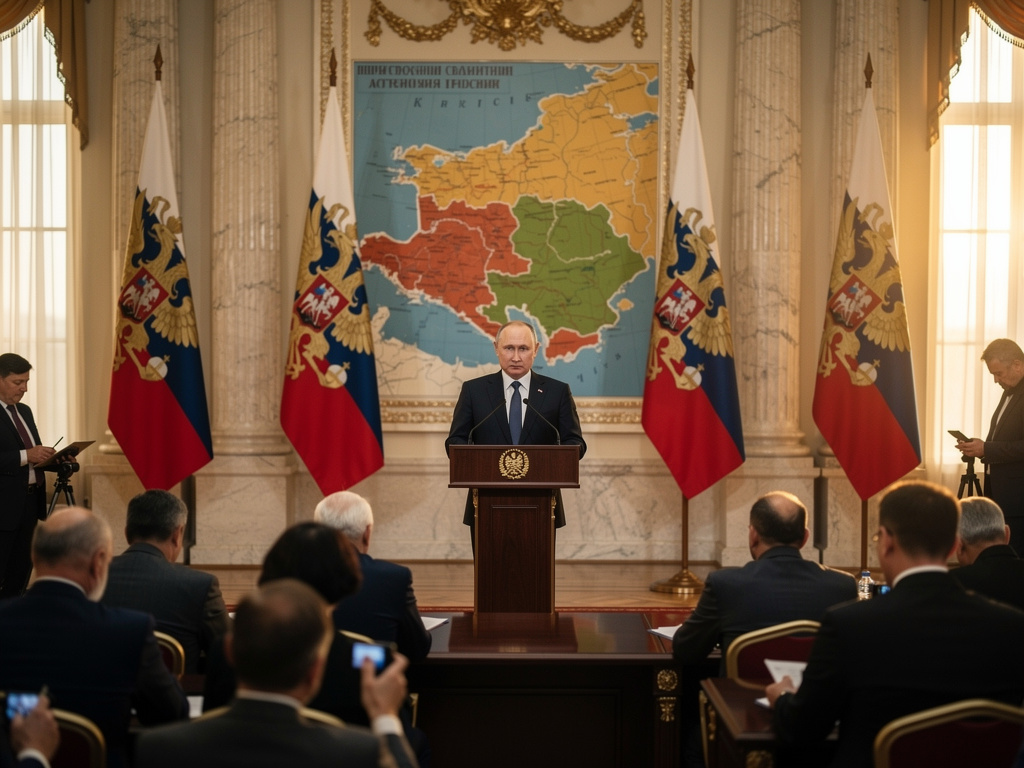
Putin's Q&A Flags Land Red Lines in Russia Ukraine War
Russia Ukraine war politics dominated Putin's annual Q&A remarks, with Moscow redrawing land demands, including Crimea, and signaling no concession on territory. Putin said Russian forces have fully seized the strategic initiative and anticipate further gains before year’s end, while Zelenskyy said Ukraine's constitution bars ceding land, leaving negotiating space for security guarantees and NATO membership as a strategic objective. EU leaders approved a $105 billion, interest-free loan for 2025–2027 to support Kyiv, while debates over using frozen Russian assets continue; Western diplomacy and U.S. mediation push aim to end the conflict, amid an estimated two million casualties that underscore the toll.
Background & Context
- The Russia Ukraine war began in 2022 with Russia's full-scale invasion of Ukraine and has persisted through periodic front-line offensives, cross-border strikes, and efforts to consolidate control over occupied Ukrainian territories, including ongoing Russian airstrikes and military activity.
- A public-facing Q&A format in Moscow frames Moscow's aims, while Western capitals pursue diplomatic channels and Kyiv seeks guarantees and support for its defense needs amid a protracted security confrontation.
- The European Union has shifted financing approaches by funding Ukraine’s war effort through a significant loan, raising debates over asset-based funding and legal risk sharing as part of broader sanctions and economic pressure.
- The human and economic toll remains high, with widespread energy disruptions and sanctions shaping the regional security landscape and influencing resilience planning in multiple Ukrainian regions.
- Diplomatic efforts continue to intensify, with US-led initiatives to broker peace and discussions about security guarantees, including Kyiv’s openness to assurances short of full Article 5-style guarantees.
- Key actors include Vladimir Putin and Volodymyr Zelenskyy, along with United States and European Union policymakers coordinating defense support and diplomatic responses to the conflict.
- The broader geopolitical backdrop features ongoing Russia NATO tensions and concerns about energy security, sanctions regimes, and the evolving regional security architecture in response to the conflict.
Key Developments & Timeline
- Feb 2022–Dec 2025: In the ongoing Russia Ukraine war, casualty estimates surpass two million; Russia asserts territorial gains in eastern and southern regions. This extended conflict phase reflects persistent military operations, ongoing humanitarian impact, and evolving international responses as governments reassess security commitments and regional posture toward Russia and Ukraine.
- Dec 19, 2025: Putin’s annual Q&A at the Gostiny Dvor discusses land issues and battlefield progress, reiterating Moscow's demand for ceding territory and signaling how political messaging aligns with military developments. The remarks occur amid Russia NATO tensions and a broader effort to shape international narratives during a critical phase of the war.
- Dec 2025: Kyiv reiterates constitutional protections against land ceding and continues negotiations on security guarantees with Western partners, underscoring constitutional constraints on territorial concessions while keeping doors open for bilateral assurances that could influence future security arrangements and NATO-related discussions.
- Dec 2025: EU leaders approve a $105 billion, two-year loan to Ukraine for military and economic needs, opting for cash borrowing over asset seizure to fund defense. The package supports ongoing reconstruction, humanitarian relief, and sustained defense production as part of the broader response to the conflict.
- Dec 2025: US- and allied-led diplomacy intensifies with Donald Trump and aides attempting to broker talks with a Russian delegation, illustrating high-stakes efforts to secure tangible progress in negotiations on security guarantees amid elevated risk and ongoing cross-border tensions in eastern and southern regions.
Official Statements & Analysis
In the Russia Ukraine war, Vladimir Putin stated, "We know from statements from Zelenskyy that he’s not prepared to discuss territory issues," followed by "Whatever they stole, they’ll have to give it back someday," signaling Moscow's insistence on territorial outcomes as a precondition for any negotiation. Volodymyr Zelenskyy countered, "To be honest, I don’t think we need to change our country’s constitution," while Donald Trump said he is "getting close to something" in talks to end the war, a combination that highlights a stark strategic divide between hardline positions and potential diplomatic openings that the international community will watch closely. These quotes, set against the broader Russia Ukraine war, underscore how leadership rhetoric can shape early-stage diplomacy, battlefield expectations, and the risk environment for allied partners.
From an analysis perspective, the statements matter because they frame the negotiating ceiling and influence Western policy on sanctions, security guarantees, and support for Ukraine, while the implications emphasize that border security, energy resilience, and infrastructure protection remain core concerns for civilians and responders amid ongoing hostilities. The accompanying risk guidance notes to stay informed on energy outages, maintain relocation plans, stock essential supplies, and monitor evacuation routes, all of which reflect a reality where diplomatic dialogue coexists with persistent military pressure and potential escalation, including ripple effects on energy grids and supply chains. In the broader context of Russia NATO tensions and ongoing financing discussions for Ukraine, these statements contribute to a volatile risk environment that requires nuclear threat preparedness and robust military strategy planning as part of resilience and policy analysis.
Conclusion
In the ongoing Russia Ukraine war, Putin's annual Q&A remarks and the EU’s sizable, interest-free loan to Ukraine—alongside Western talks on frozen assets—signal a dual track of renewed diplomacy and sustained military pressure, with explicit territorial red lines shaping both negotiation and strategy to bolster defense capabilities and regional stability. The coverage underscores the toll on people and economies, while a continued Western push led by the US seeks to end the conflict and lay groundwork for security guarantees or framework arrangements that influence long-term security and survival planning. For readers focused on preparedness, maintain contingency plans for energy outages, secure communications, and safe relocation routes; consider off-grid power options and reliable supplies, and monitor official advisories and evacuation routes. Looking ahead, possible trajectories include negotiation breakthroughs yielding security guarantees while preserving Ukraine’s sovereignty, a continued stalemate with periodic clashes and energy disruptions, or incremental diplomatic progress supported by international financing to sustain defense and reconstruction—the Russia Ukraine war latest update will continue to shape policy, risk assessments, and everyday preparedness.
Hand Sanitizer – Disinfect on the go — keep compact sanitizer bottles in your prep stash.
Portable Power Banks – Keep your devices charged during blackouts — explore solar-compatible power banks.
Related: China Stock Market Rallies Over $3 Trillion Amid Retail Surge
Related: US Airstrikes in Yemen Kill 12 Amid Houthi Conflicts