
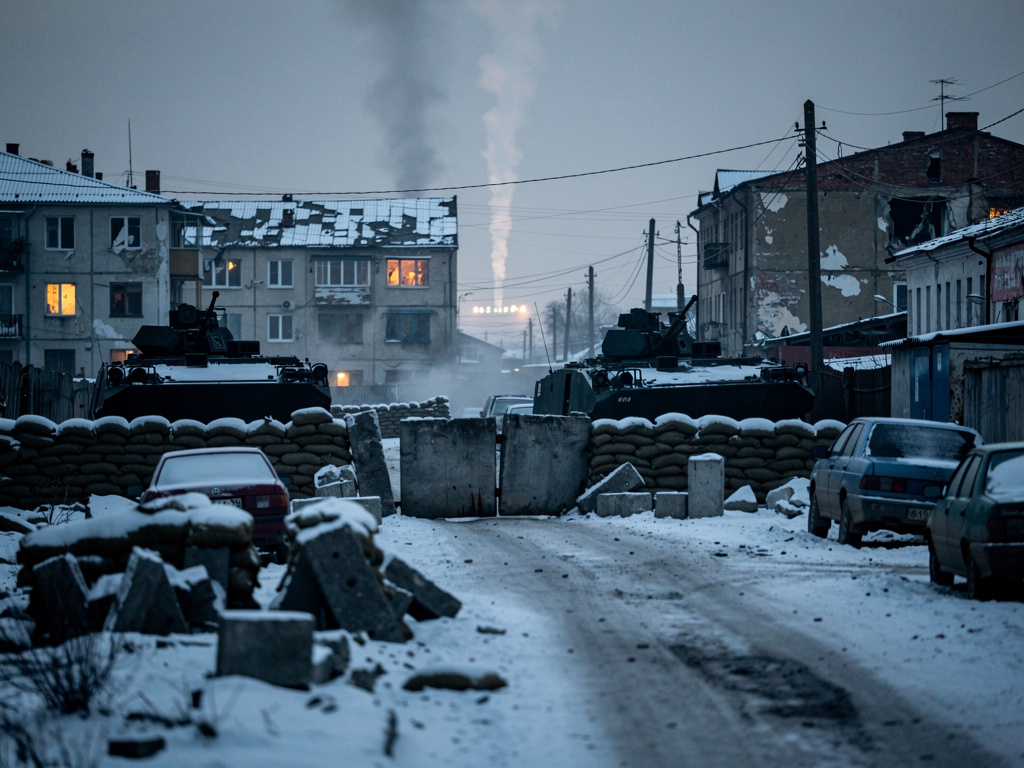
Siversk Withdrawal Amid Nuclear Threat Debates in Ukraine War
In the Russia Ukraine war, Ukrainian forces withdrew from Siversk after days of heavy fighting, citing a significant advantage by Russian forces in manpower and equipment that made a sustained defense untenable. The move was intended to preserve soldiers and unit combat capability, with Ukrainian forces maintaining fire control from the town and blocking enemy advances, even as Russian units pushed toward nearby areas in Donetsk. Subsequent assessments, including DeepState reports, indicated Russian occupation of Siversk and nearby Hrabovske in Sumy region, signaling a broader pattern of gains for Moscow amid ongoing fighting by Russian troops and diplomatic efforts around Ukraine’s borders.
Background & Context
- The conflict is part of the ongoing Russia Ukraine war, intensified by Moscow's Russia's 2022 invasion. The Crimea annexation in 2014 remains a reference point for regional tensions, and the Donetsk region has long been a focal area for control. By December 2025, Russia controlled about 19% of Ukrainian territory, including Crimea, most of Donetsk, and parts of Kherson and Zaporizhia.
- Donetsk is one of four Ukrainian regions founded on a Moscow-backed separation model, a framework that has shaped political alignments and contributed to fragmentation of governance in the area prior to and during the current conflict.
- Siversk, a town of about 10,000 residents before the war, became strategically important for northern Donetsk defense, though its population has declined as fighting and displacement progressed.
- Fighting has been characterized by heavy artillery, maneuver warfare, and weather-related operational challenges, with both sides reporting difficult conditions for sustained combat operations in the front-line environment.
- A 28-point peace plan attributed to the Trump administration proposed recognizing Crimea, Luhansk, and Donetsk as de facto Russian, illustrating a prior diplomatic pathway referenced in reporting on the conflict.
- Key actors include Ukraine, Russia, and the United States, with important individuals such as the Ukrainian General Staff, Russian Lieutenant General Sergei Medvedev, Vladimir Putin, and Volodymyr Zelensky named in discussions about the conflict.
- In the broader security discourse, analysts monitor issues around Russia's nuclear threat and Russia's nuclear doctrine, including long-tail questions such as "What is Russia's nuclear doctrine?" that shape regional risk assessments within the Russia military landscape.
Key Developments & Timeline
- November 2025: In the Russia Ukraine war, the Trump administration releases a 28-point peace plan proposing recognition of Crimea, Luhansk, and Donetsk as de facto Russian. The proposal outlines a diplomatic framework and security guarantees, signaling a potential shift in mediation dynamics amid ongoing tensions.
- December 2025: Historical context notes that Russia had seized large parts of several Ukrainian regions, including Crimea (2014) and substantial portions of Kherson and Zaporizhia, shaping the broader strategic landscape and the international response to the conflict.
- Early December 2025: Reports indicate heavy fighting around Siversk as Ukrainian forces face sustained pressure. Russian units reportedly leverage severe weather and manpower advantages, pursuing small-unit assaults intended to erode fire control and degrade Ukrainian defenses.
- December 11, 2025: Russian Lt. Gen. Sergei Medvedev tells President Putin that Russian troops had taken Siversk; Ukraine publicly denies the claims at the time, illustrating the fog of war and contested reporting from the frontline.
- December 2025: Ukrainian General Staff notes Russia’s significant advantage in manpower and equipment, with ongoing pressure through small-unit assaults in difficult weather. The assessment underscores challenges in maintaining momentum and sustaining operations under harsh conditions.
- Circa December 2025: Zelensky states that the United States is pushing for Ukraine to withdraw from Donetsk to establish a “free economic zone” (described by Russia as a demilitarised zone), highlighting concurrent diplomatic and economic considerations alongside military activity.
- Late December 2025: DeepState monitoring site reports that Russian forces occupied Siversk and nearby Hrabovske in the Sumy region, indicating expanding control in contested border areas and raising concerns about civilian safety and regional stability.
- December 24, 2025: Ukraine’s General Staff announces withdrawal from Siversk to preserve soldiers and combat capability; Siversk remains under Ukrainian fire control and enemy advances are blocked, reflecting a strategic pullback to consolidate frontline strength.
Official Statements & Analysis
In the context of the Russia Ukraine war, Ukrainian authorities framed the Siversk withdrawal as a calculated move amid a battlefield where Moscow’s forces allegedly hold a significant advantage in manpower and equipment, stating that the decision was taken to preserve the lives of our soldiers and the combat capability of the units even as the town remained under Ukrainian fire control and enemy units are being blocked to prevent their further advance.
The phrasing underscores a tense ground reality—Ukraine signaling restraint to limit casualties while portraying a tactical edge elsewhere, and observers note that Russian gains and continued pressure in Donetsk and adjacent regions complicate humanitarian access and the prospects for a negotiated settlement.
These statements matter for military strategy and geopolitical risk assessment because they illustrate how operational choices—withdrawals, unit readiness, and blocking advances—shape displacement risks for residents in Donetsk and nearby areas, potential disruption of humanitarian corridors, and exposure to cross-border activity near contested borders.
Monitoring developments through reliable official sources remains essential for survival planning and policy responses, reinforcing the need for nuclear threat preparedness discussions as part of broader security assessments.
Given the broader diplomatic context, observers should consider how proposals and negotiations intersect with ongoing Russian military posture and questions such as what is Russia's nuclear doctrine, underscoring the stakes in this evolving geopolitical conflict.
Conclusion
In the Russia Ukraine war, the recent Siversk withdrawal highlights how frontline decisions aim to preserve unit combat capability: Ukrainian forces pull back under heavy pressure while Russian forces consolidate control in Donetsk and nearby corridors, keeping the area under continued fire and political attention. This episode fits a broader pattern of gains for Moscow and underscores a shifting diplomatic terrain, including discussions around a Trump-administered 28-point peace plan that could influence future operations, deterrence calculations, and the pace of any potential settlement. Looking ahead, the outlook remains uncertain: continued heavy fighting in eastern Ukraine, potential further Russian military buildup and territorial consolidation, and ongoing diplomacy that could yield de-escalation or a demilitarised framework around contested zones. For readers tracking the Russia Ukraine war, reliable information, humanitarian preparedness, and resilient civilian planning are essential as the security landscape evolves, with ongoing questions about Russia's nuclear doctrine and how nuclear deterrence may shape future operations.
Military Compass – Navigate without GPS — explore reliable compasses made for survival.
Bug-Out Bag Essentials – A compact go-bag setup perfect for urban or rural disasters.
Related: Magnitude 6 Earthquake Disrupts Eastern Afghanistan, Over 600 Dead
Related: Donbas Remains Battlefield as Trump Urges Zelenskyy to Consider Concession