
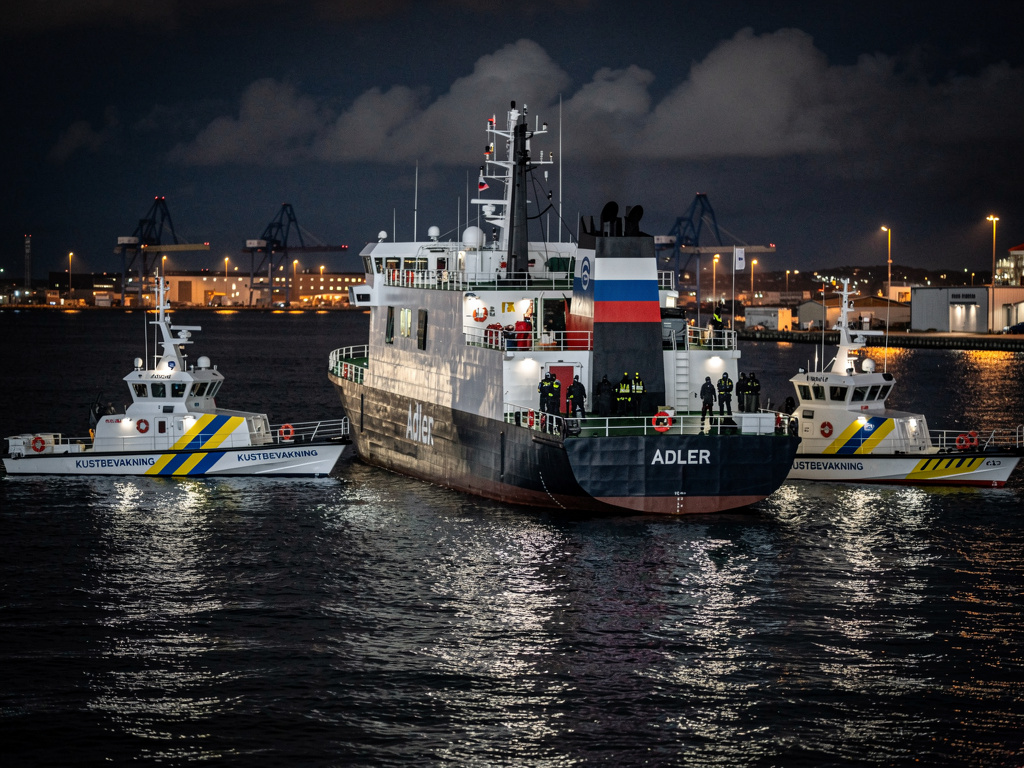
Sweden Probes Sanctioned Adler Freighter Amid Nuclear Threat Concerns
In the Russia Ukraine war era, Swedish authorities boarded the Adler, a 126-meter Russian roll-on/roll-off carrier, after engine problems left it anchored off Hoganas and subject to EU and US sanctions for suspected weapons transport. The inspection, carried out by Swedish Customs with Coast Guard support and authorities, involved prosecutors and the National Task Force, focusing on whether the Adler carried restricted weapons-related cargo; officials have not disclosed cargo or destination. Adler departed St. Petersburg on December 15 and was in Swedish waters by December 21–22, 2025, with a prior 2021 boarding by Greek forces under EU Operation Irini highlighting how sanctions enforcement has persisted in the region.
Background & Context
- The Adler is on EU and US sanctions lists due to suspected involvement in weapons transport, according to OpenSanctions. The vessel departed from St. Petersburg on December 15, and its destination remains publicly unconfirmed; this action occurs within the broader context of the Russia-Ukraine war and a Western sanctions regime aimed at curbing illicit arms shipments.
- In the latest operation, the Swedish authorities conducted the action at night with agencies including the Swedish Customs Administration, the Swedish Coast Guard, the National Task Force, the Swedish Security Service, and prosecutors, illustrating a coordinated maritime enforcement effort.
- In January 2021, Adler was boarded by Greek forces in the Mediterranean under EU Operation Irini, which monitors the UN arms embargo on Libya, marking a previous sanctions enforcement instance involving the ship.
- The broader diplomatic context involves the EU's Operation Irini history (2015–present), indicating that current measures are enforcement-oriented rather than new diplomacy, and reflect evolving responses to suspected arms transfers.
- Key regional players include Sweden, Russia, the European Union, the United States, and historically Greece, with the ship's owner listed as M Leasing LLC, highlighting the cross-border nature of sanctions administration and compliance challenges.
- Important actors named in the case include the Swedish Customs Administration, Swedish Coast Guard, National Task Force, Swedish Security Service, prosecutors, and the Adler's operator/relevant registries, illustrating the multi-agency approach to sanctions enforcement.
- Public reaction to the new enforcement action has not been disclosed in the available information, but observers note that maritime sanctions enforcement remains a critical tool in deterrence and global security policy related to the Russia geopolitical conflict.
Key Developments & Timeline
- January 2021 — Adler was boarded by Greek forces in the Mediterranean under EU Operation Irini (Libya arms embargo). This early boarding placed the vessel on EU sanction enforcement radar and linked it to weapons transport allegations later noted in sanctions discussions, with M Leasing LLC listed as the owner. The incident occurred amid rising global security concerns and the broader context of the Russia Ukraine war, highlighting intensified maritime scrutiny in the Mediterranean. This timeline also provides the Russia Ukraine war latest update as sanctions regimes expand.
- December 15, 2025 — Adler departs St. Petersburg, Russia, signaling movement through Northern European waters as the ship enters an evolving sanctions landscape shaped by EU and U.S. sanctions tied to weapons transport allegations. The departure marks a pivotal point in the vessel’s history, with subsequent activity in Swedish waters and ongoing regulatory attention. No cargo details or final destination have been publicly released, underscoring ongoing monitoring of international shipping amid broader Russia military tensions and geopolitical dynamics in the Baltic region.
- December 21–22, 2025 — Adler boarded by Swedish authorities in Hoganas, Sweden; cargo inspection underway by Swedish Customs with Coast Guard support. The inspection status and cargo/destination information have not been disclosed publicly, reflecting Sweden’s role in enforcing EU and US sanctions related to weapons transport allegations. This event emphasizes how regional enforcement in the Baltic Sea region intersects with EU sanction regimes and Nordic maritime traffic during periods of heightened vigilance.
- Date not specified — Adler and/or its owners appear on EU and US sanctions lists (per OpenSanctions), with M Leasing LLC listed as the owner and a formal step in restrictive measures addressing weapons transport concerns. Although the exact entry date isn’t provided, the sanctions listing reinforces the global regulatory framework governing international shipping and compliance across Sweden, the Baltic Sea region, and the EU/US enforcement nexus.
Official Statements & Analysis
In the context of the Russia Ukraine war, Sweden conducted a nighttime inspection of a Russian freighter, with officials noting, "Shortly after 0100 (00:00 GMT) last night we boarded the ship with support from the Swedish Coast Guard and the police service in order to make a customs inspection." The update adds, "The inspection is still ongoing," and confirms that "The owners of the vessel are on the European Union’s sanctions list," illustrating immediate consequences of sanctions regimes on maritime traffic.
These statements matter because they demonstrate how sanctions enforcement operates in practice, with Swedish Customs coordinating with the Coast Guard, National Task Force, Security Service, and prosecutors to verify compliance and deter illicit cargo movements in the Baltic/North Sea corridor, a dynamic shaped by ongoing Russia NATO tensions and broad Russia war news. The lack of disclosure about cargo or findings preserves a level of operational opacity, but the public linkage to EU and US sanctions signals potential legal and financial exposure for operators and suppliers, emphasizing the importance of sanctions compliance as a core element of maritime risk management in a tense geopolitical environment. The analysis also highlights how authorities may leverage such inspections to deter illicit activity and protect supply chains, which has direct implications for survivalists and logistics planners seeking to minimize disruption and maintain resilience across affected routes.
Conclusion
In the context of the Russia Ukraine war, ongoing sanctions enforcement in northern European waters underscores how fragile modern supply chains can be and why rigorous regulatory compliance matters for international shipping, insurers, and national security alike. The Adler case—where a Russian-flagged freighter is under Swedish Customs inspection with joint actions by the Coast Guard, prosecutors, and other agencies—illustrates that vessels on sanctions lists can encounter extended scrutiny, uncertain cargo declarations, and the potential for legal action or seizures if any sanctionable material is identified. For survivalists and logistics planners, this development highlights the need to monitor vessel movements, diversify sourcing, maintain contingency stock, and model delays or rerouting through the Baltic and North Sea corridors as enforcement patterns unfold in practice. Looking ahead, continued inspections and a likelihood of penalties or prosecutions could influence defense capabilities, risk management strategies, and future operations in the region, emphasizing transparent reporting, data sharing among partners, and stronger regulatory cooperation across Nordic states and EU partners.
Tent Stakes & Guy Lines – Keep your shelters secure — even in wind or snow — with strong anchors.
Cold-Weather Sleeping Bags – Survive the frost — pack a bag rated for below-freezing emergencies.
Related: Iran Launches Missile Attack on Al Udeid Air Base
Related: Russia’s Drone Strikes Escalate as Ukraine Seeks Fighter Jets Amid EU Aid Talks